About Counselling
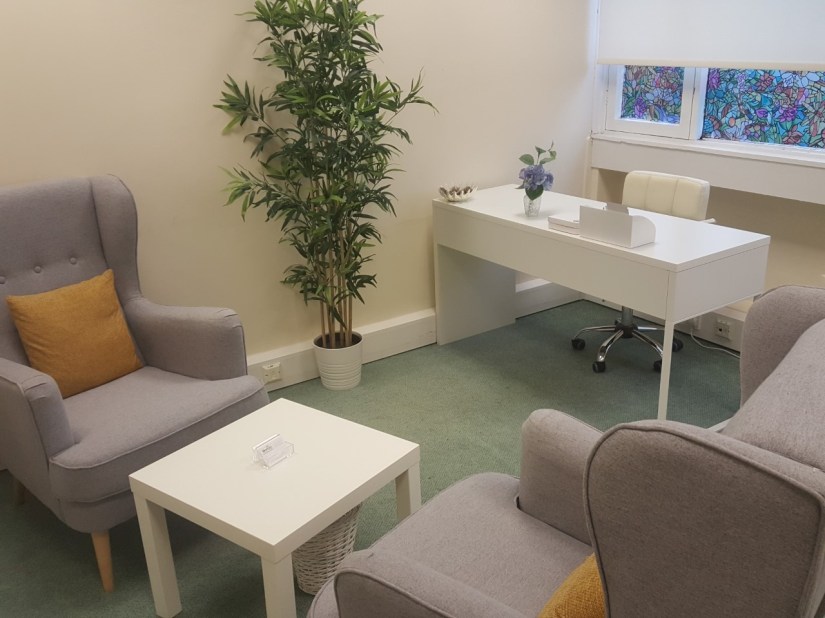
What does Counselling involve?
Counselling is a ‘talking therapy’ in which you can talk through issues or problems you may be experiencing in a safe and confidential environment with a trained counsellor.
Counselling can help you to identify and work towards the changes you wish to make in your life, and to understand yourself, your situation, your thoughts, feelings, behaviours, bodily sensations, experiences and relationships with others more fully.
It can help you to gain personal insight and to identify solutions or to find a way forward with your problems. Counselling requires an ability and wilingness to be able to talk and dialogue with your counsellor. It requires personal motivation and the capacity to attend sessions consistently.
What types of Counselling do you offer?
We offer Integrative Counselling (Person Centred, CBT, Third Wave CBT), Schema Therapy, Trauma recovery therapy for CPTSD and creative approaches -see about us for more information on how Jenny works.
What methods of counselling do you offer?
We can offer face to face, Zoom or telephone counselling sessions. Please note that we are unable to offer complex trauma recovery counselling via telephone during the intial safety and stabilisation phase of therapy.
For remote counselling you will require access to a comfortable, quiet and confiidential space and a sufficient internet connection and/or phone signal.
Who are your Counsellors?
Jenny Bell is an experienced and accredited, qualified integrative counsellor. Please see About Jenny for more details
What types of issues can you help with?
Counselling can help with a wide range of issues including (and not limited to):
- Depression
- Low mood
- Anxiety
- Stress
- Trauma; PTSD, CPTSD
- Loss and Bereavement
- Low self-esteem and confidence issues
- Work Related Issues
- Family issues
- Issues from childhood
- Relationship issues and breakdown
- Anger
- Mental Health issues
- Addictions
- Difficulties relating to being neurodivergent
Suitability for Counselling:
Counselling requires an ability and willingness to talk and to dialogue with your counsellor regarding your issues. It requires a personal motivation to work towards your own desired change within your life. It also requires you to be able to commit towards attending counselling sessions consistently.
Counselling is not a crisis support. If you are at risk of immediate risk of harm to yourself or from others, we will be unable to commence counselling at this stage, and we could refer you back to your GP and/or other more suitable supports.
Should you require more immediate help and support we would advise contacting your GP, or 111 for the NHS 24 mental health line hub (available 24 hours per day) or dialling 999 if there is an immediate risk to your safety.
There are also the below services:
- Breathing Space (confidential listening service, trained volunteers): Monday to Thursday from 6pm to 2am, and from 6pm on Friday to 6am on Monday- 0800 83 85 87
- Samaritans: Call 116 123 to talk to a trained volunteer about anything troubling you.
- Shout: Text SHOUT to 85258 for free, anonymous text-based crisis support.
- The Nook (SAMH): Scotland’s mental health charity SAMH has drop-in hubs that require no NHS referral or booking. Check the SAMH website for locations and opening hours.
- National Suicide Prevention Helpline UK- Offers a supportive listening service to anyone with thoughts of suicide. You can call the National Suicide Prevention Helpline UK on 0800 587 0800 (6pm to midnight every day). If you’re unable to connect to the main number, you can call 0800 689 0880.
- Campaign Against Living Miserably (CALM)- You can call CALM on 0800 58 58 58 (5pm–midnight every day) if you’re affected by suicide or suicidal thoughts. Or if you prefer not to speak on the phone, there is a webchat option on the CALM website.
How much does Counselling cost?
Counselling is £50 per session. You can pay in cash on the day or by BACS Payment.
How many sessions will I need and how often will we meet?
People vary in how much counselling they will need, some people attend for just a session or two or others for longer. You can have as many or as few as we mutually agree is needed. We either will agree to meet you weekly or fortnightly depending on what fits you best.
Your counsellor will review regularly and seek feedback to try to identify your sense of your progress towards your desired goals or changes for counselling. Your counsellor will seek to establish your experience of the counselling process and your chosen therapeutic approach(es) and of the therapeutic relationship.
Your counsellor will seek to identify if there may have been any changes or new issues/needs that may need to be considered within the counselling process. They will check whether your goals remain relevant or if you may require them to be revisited.
Please note that your counsellor reserves the right to terminate counselling sessions at any stage if it is felt that it is not a suitable or safe support for you currently. In this instance your counsellor will endeavour to refer or signpost you to a more suitable support.
Counselling Approaches Additional Information:
Schema Therapy is a longer-term therapy. It can be very successful in helping those who may have faced adverse childhood experiences, and feel that the issues they are struggling with in the ‘here and now’ may be related.
Although it is a longer term therapy, schema therapy can support you towards making lasting changes in areas where you may have had long-term issues, for instance such as with unhealthy patterns within your intimate relationships, or in how you relate to yourself, the world and others. It can often help where other types of therapy may have been unsuccessful, as it can help you to attend to issues on a deeper level than some other therapies may do.
Trauma Recovery Therapy, which is aimed at clients experiencing symptoms of CPTSD, involves a staged approach to therapy. The length of this may vary depending on your needs, difficulties and preferred goals for therapy.
For instance Stage 1 of the process is about working towards increased ‘safety and stabilisation‘ in life, including management of trauma symptoms and triggers, which may feel enough for some clients at this time. However others may wish to continue towards Stage 2 which involves trauma reprocessing, and Stage 3 which involves working towards rebuilding and reconnecting after trauma and leading a more fulfilling life.
What days/times is Counselling available?
Counselling is available during weekday evenings and Wednesday daytimes/evenings and Friday daytimes.
Where are you located?
Suite 18B, Carron House, Cumbernauld, G67 1ER. There is dedicated car parking in Green Car Park 2 .
How do I book?
See Contact Us to book a session or discuss further.
Supervision
Is available at a rate of £40 per hour, £55 for 1.5 hours
Counselling Placements
We are unable to offer counselling placements unfortunately.

